Things to Do in Mauritania: A Detailed Guide
Things to Do in Mauritania: A Detailed Guide
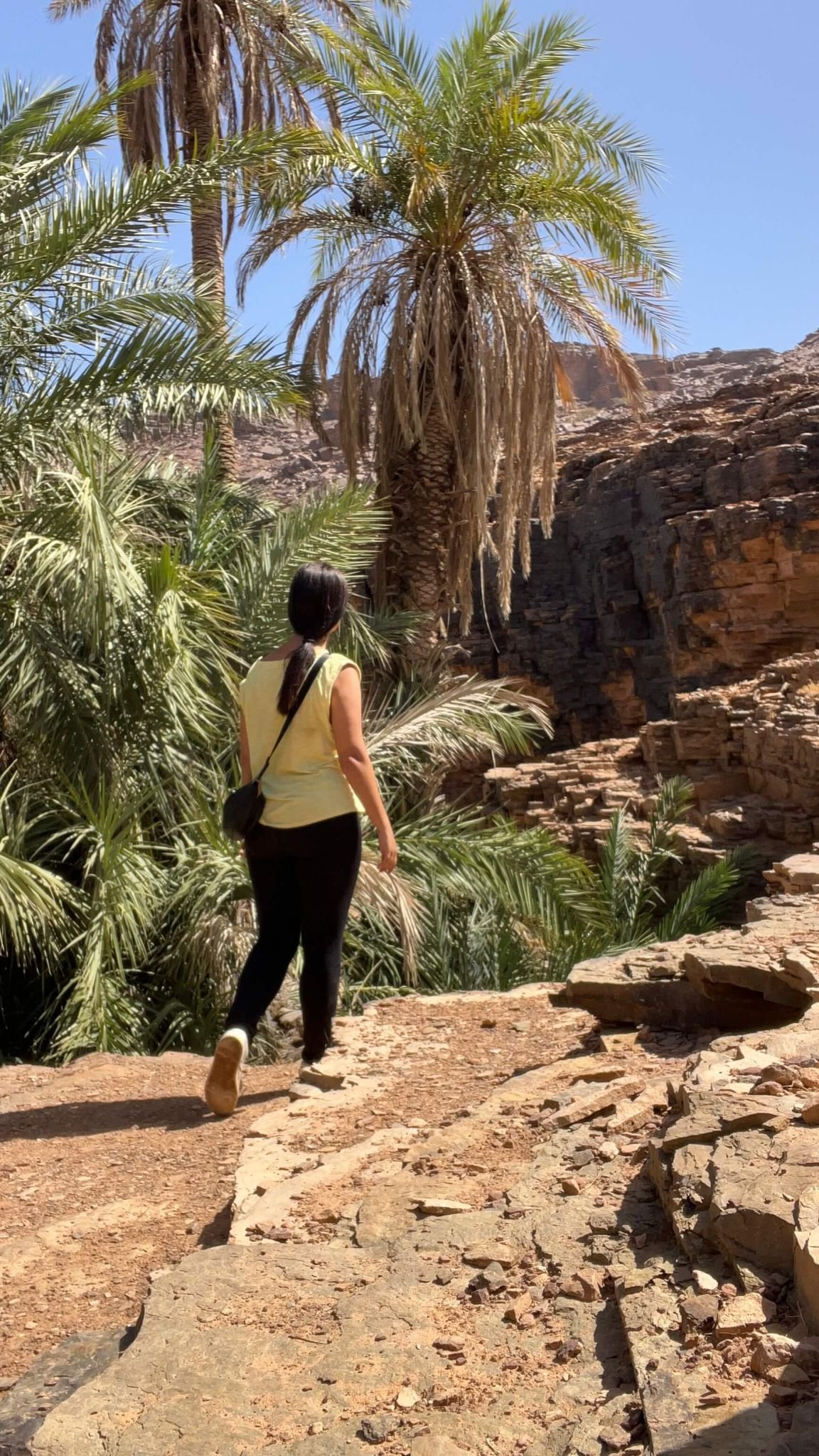
Mauritania is known for its iron ore train, but there are definitely more things to do in Mauritania. I spent ten days in Mauritania and could have comfortably stayed more, particularly in the desert. Here is a detailed guide of all the things there are to do and what is actually worth your time.
Nouakchott: A Necessary Stop, Not a Destination
Most travelers arrive in Nouakchott, Mauritania’s capital, and that’s about all it is. There is not a great deal to do here for the average traveler. Some people visit the camel market but I chose not to after hearing reports about how the animals are treated there. You can take a taxi out to one of the coastal beach areas (I did this with a local couchsurfer) but swimming is not really done there. I wouldn’t go out of my way to do this, either.
Stay near the Olympic Stadium area: it’s safe, walkable, and well-connected. Get your cash sorted and move on within a day or two. Nouakchott is a logistical base, not a highlight.
Atar: Your Gateway to the Sahara
Atar is where your Mauritania adventure actually begins. You can take a bus or shared taxi from Nouakchott. The town itself doesn’t have much to offer beyond logistics, but that’s not the point. Atar is your base for everything that follows: the ancient desert cities, the oases, the desert camps, and the iron ore train.
If you book your accommodation in advance and speak to them directly, they might pick you up from the station. Read reviews, and reach out to them beforehand. They mostly make their money by organizing day trips and desert excursions. They know the area better than any guidebook, they have contacts with local guides or happen to be guides themselves.
My personal suggestion? Do the trips into the desert and then get your supplies for the iron ore because this is also your last proper chance to do so. Ski goggles, blankets, rice sacks, etc. You will not find what you need in Choum. Make sure to check out my Iron Ore Packing List for the full guide.
Chinguetti: The Ancient Library City
Chinguetti is one of the seven holy cities of Islam and a UNESCO World Heritage Site. An ancient desert trading town right at the entrance of the Sahara. The highlight here are the libraries, and specifically the men who guard them. These are the guardians of manuscripts that are hundreds of years old, passed down through generations.
A practical note: the guardians speak French or Arabic, not English. Google Translate will get you through. I used it throughout my visit and it worked well enough to have a real conversation. Make the effort. The context they give you transforms the experience entirely.
Chinguetti is reachable from Atar as a day trip but an overnight stay gives you more time in the dunes and a completely different atmosphere once the day visitors leave.
Ouadane: Even Further, Even Better
Ouadane is further from Atar than Chinguetti and more difficult to reach. It’s even more beautiful and less visited. Like Chinguetti, it has ancient libraries with manuscripts centuries old and the same tradition of guardians preserving and passing on knowledge through generations.
If you only have time for one you can do Chinguetti since it’s closer to Atar but if you can spare the time do both. They’re both tiny, but Ouadane is much more expensive because of the gas prices and distance.
Sleep in the Sahara
This is the experience that Mauritania does better than almost anywhere else on earth. Spending a night (or ideally two) camping in the desert was one of the highlights of this multi-country trip I took through the region.
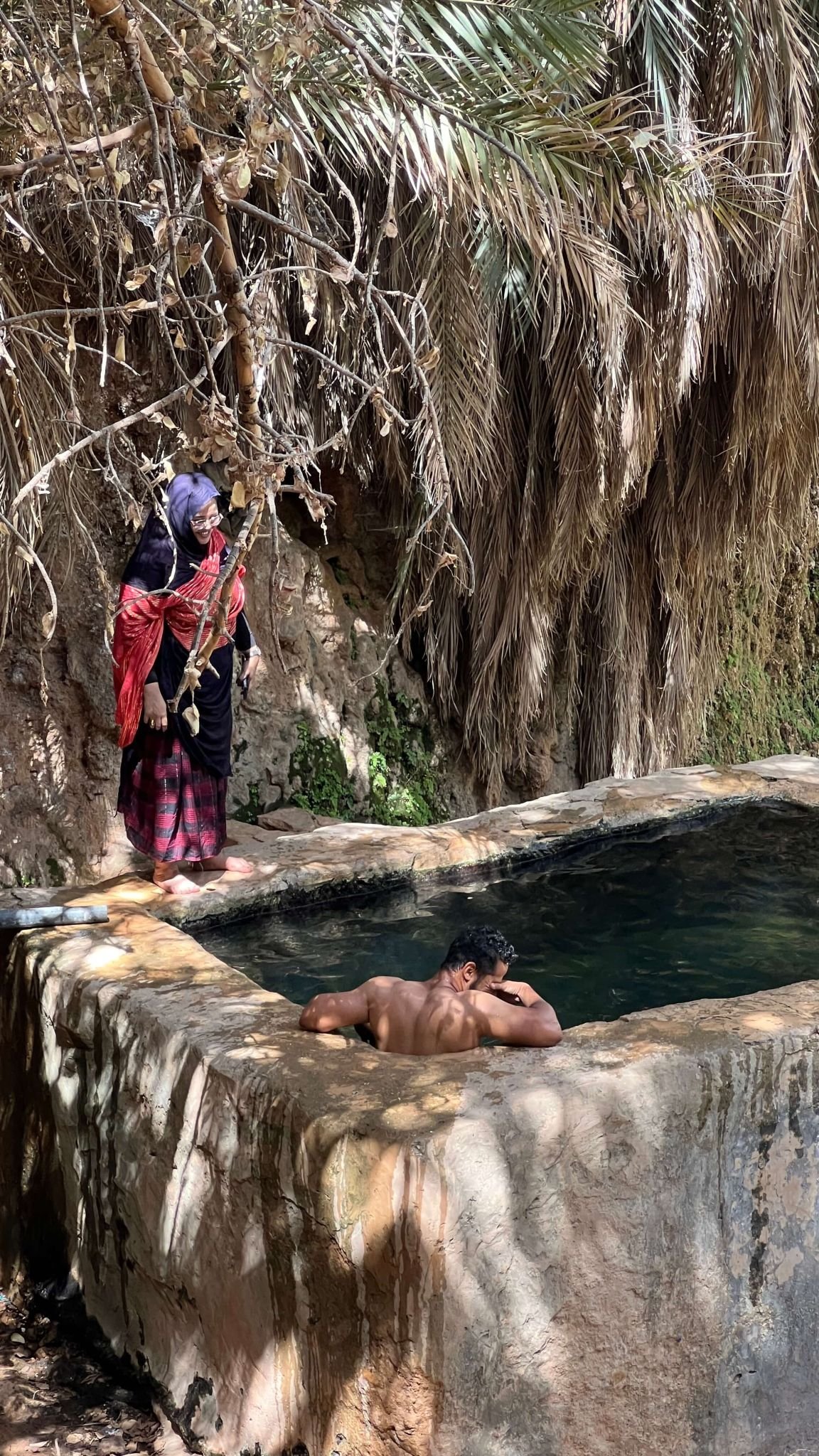
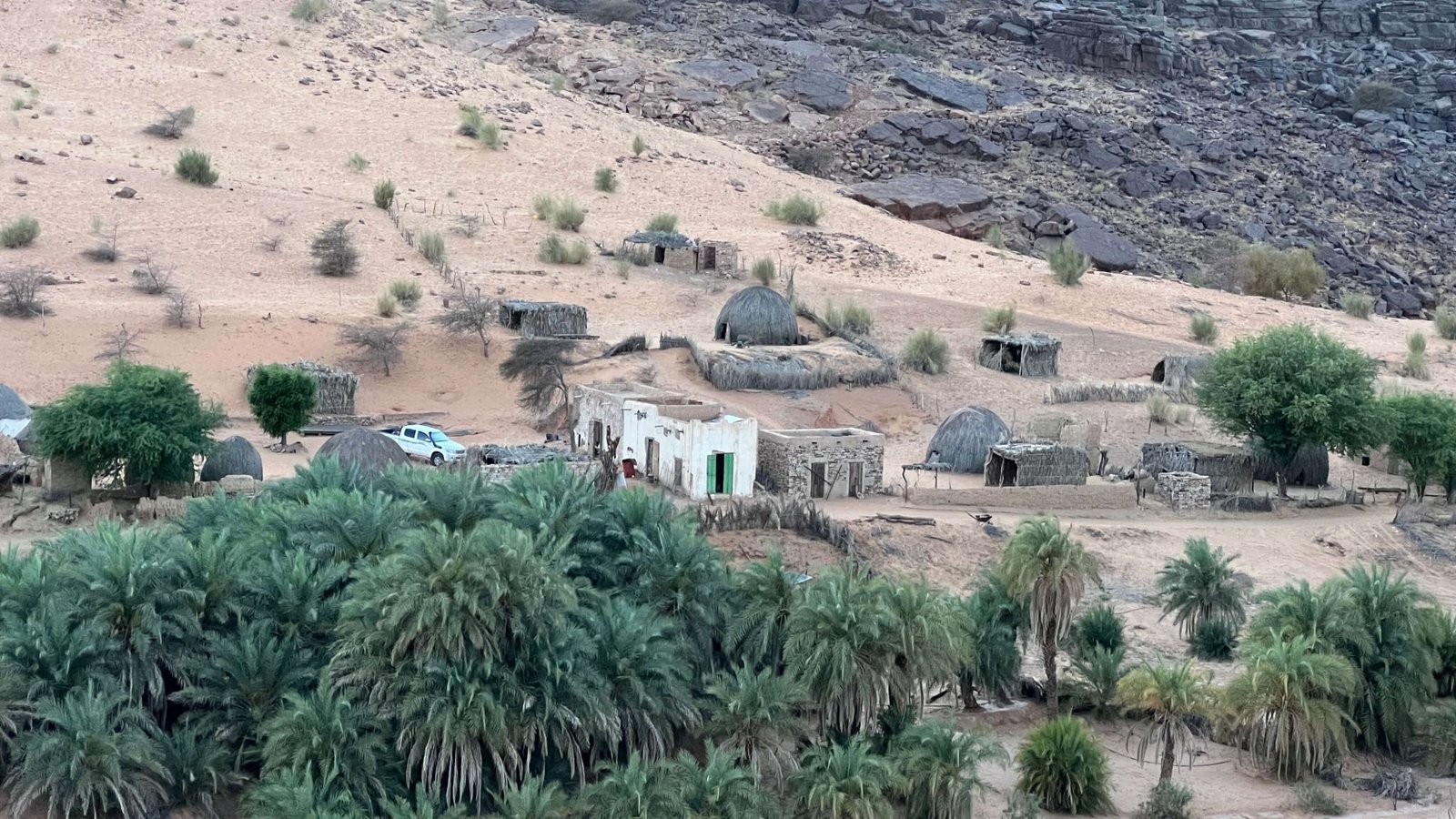
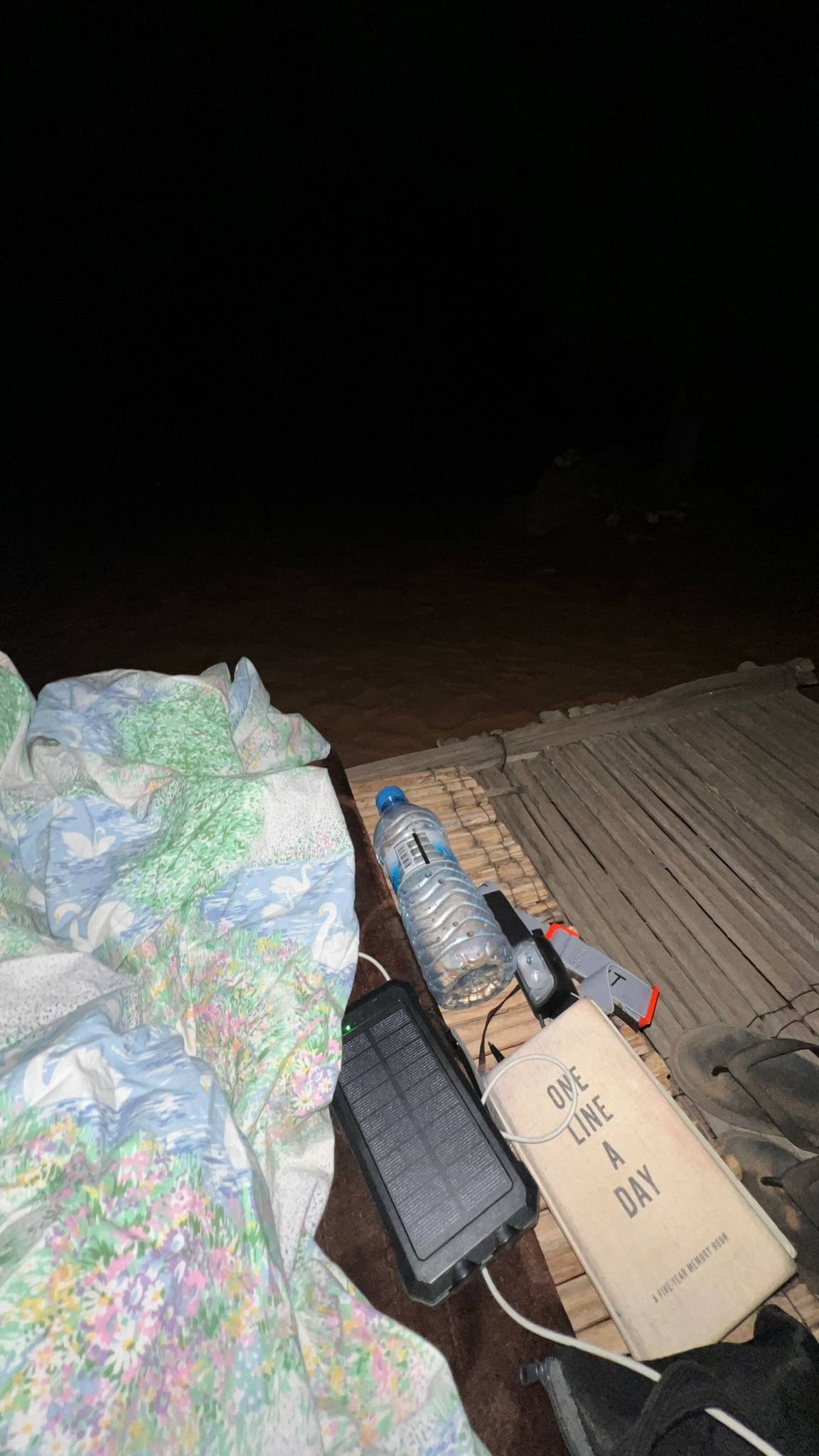
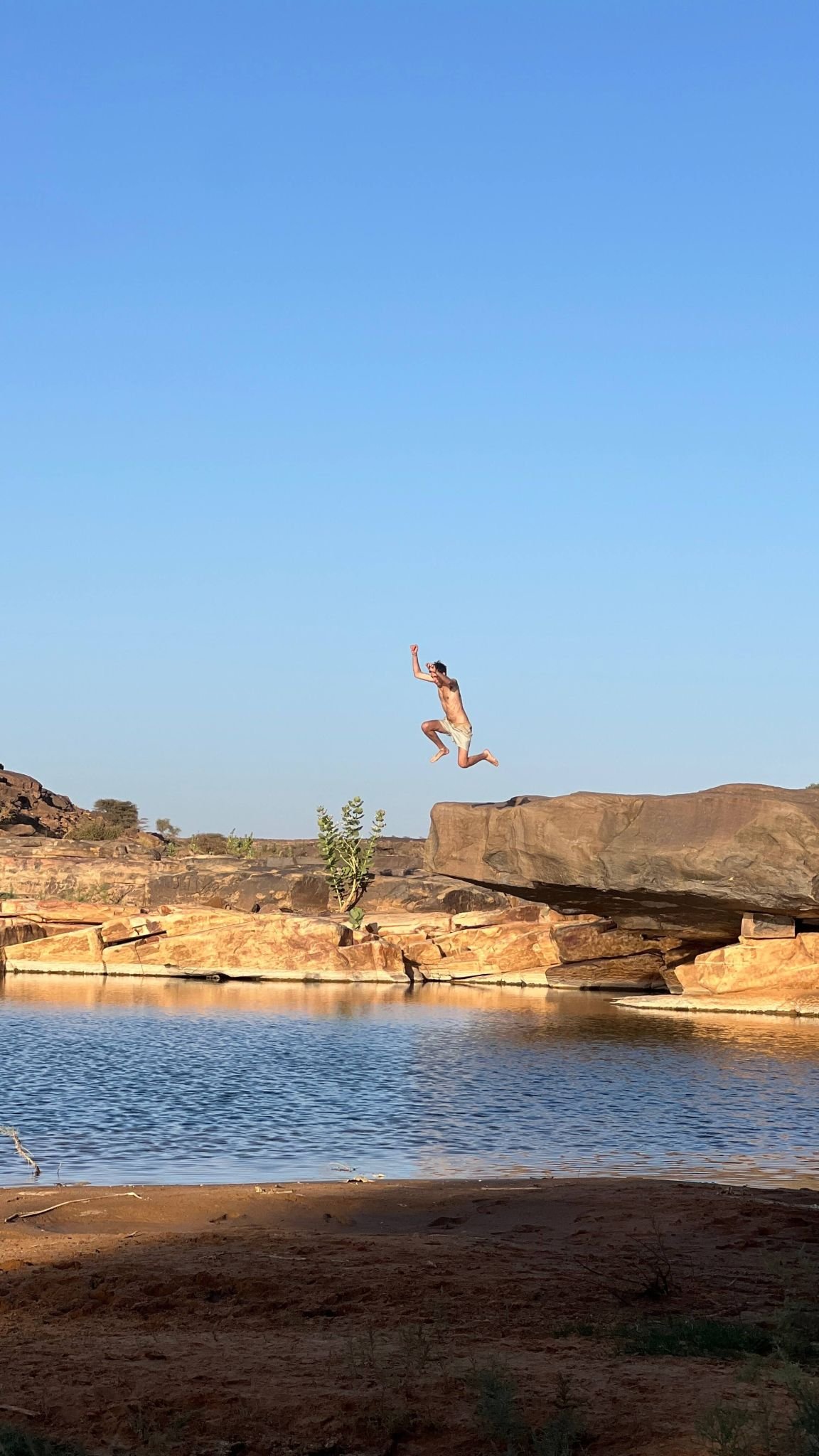
I skipped Terjit, the most popular oasis camp, and went somewhere less visited, all because the man from the accommodation we were in recommended it. It was a smaller oasis where we were the only guests. Our desert camp had a natural pool. We swam in the middle of the desert with nobody else around. It was completely surreal.
We did stop in Terjit on the way back and I am happy that we didn’t end up staying there. It was definitely more touristy, and we had the opportunity to compare both places. Terjit was more lush, that’s for sure, but the tiny place we were in, and being able to sleep outside in the desert was something we could not have been able to do in Terjit.
If you are planning to ride the iron ore train, keep track of your time in the desert. I could have stayed a second night in the desert but had to leave for the train. Given the choice again, I would have built in more time for the desert and adjusted the train timing accordingly.
The Iron Ore Train
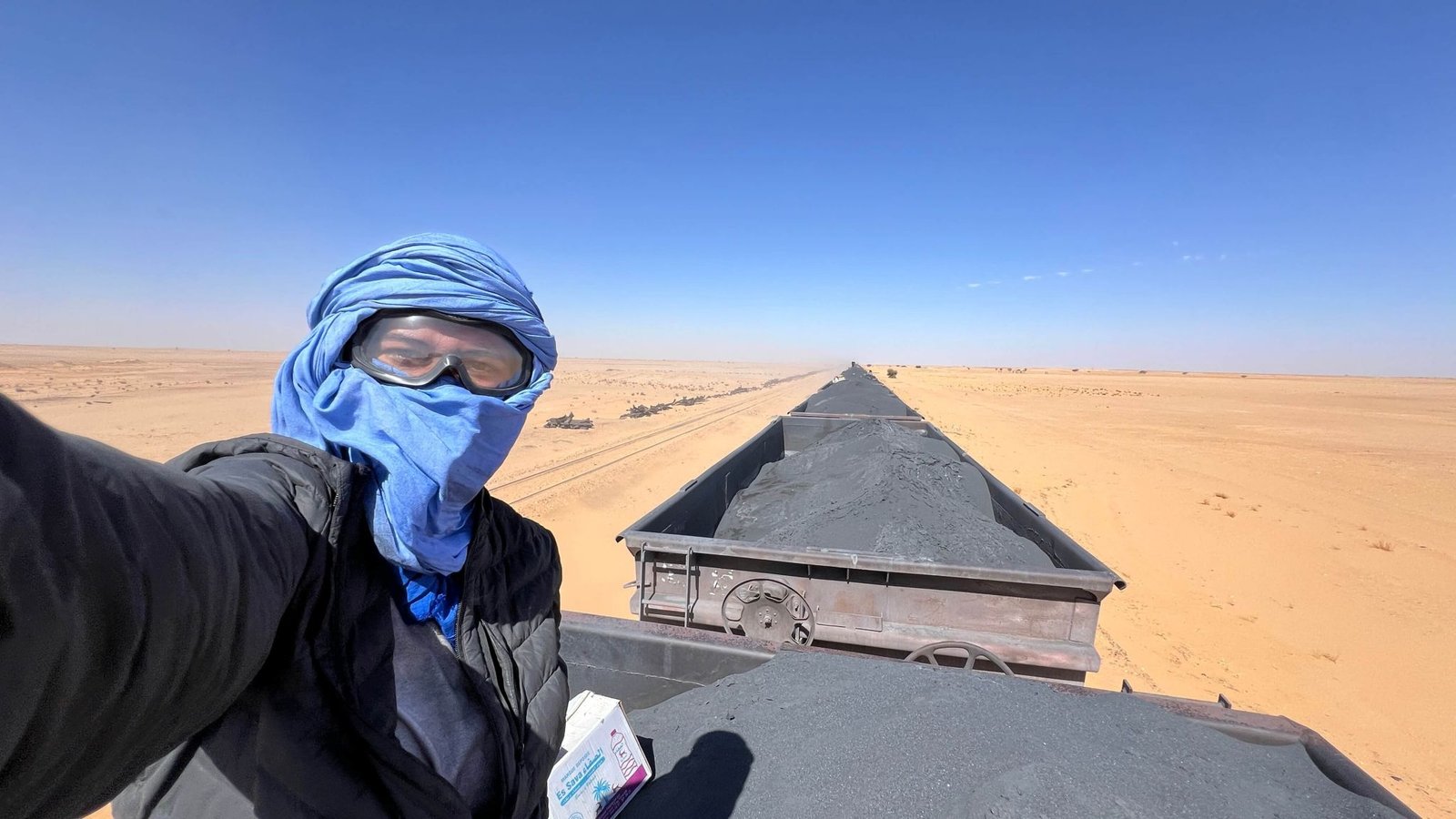
Riding the Mauritania iron ore train is, for most people, the main reason to come to Mauritania. And yes, it was worth the journey. As someone who’s a big fan of trains and has gone out of her way to take them all around the world, this was definitely one of my top travel experiences.
I have a full dedicated guide covering everything you need to know: How to Ride Mauritania’s Iron Ore Train After the 2024 Ban. Read it before you plan anything else.
One note on direction: some travelers ride the train from Nouadhibou rather than to it. The wagons going in that direction carry no minerals. They are empty and you are far more visible and more likely to be caught. Do the full loop: Nouakchott to Atar to Choum, ride to Nouadhibou, then head back to Nouakchott again if you’re heading down south. If not, take a bus to the border with Morocco/ Western Sahara. There is no road connecting Nouadhibou and Choum, so the loop via Nouakchott is the only option regardless.
Nouadhibou: Rest and Recovery
After the iron ore train, Nouadhibou is a resting point rather than a destination. Spend a day or two here recovering, cleaning your gear, and decompressing before moving on.
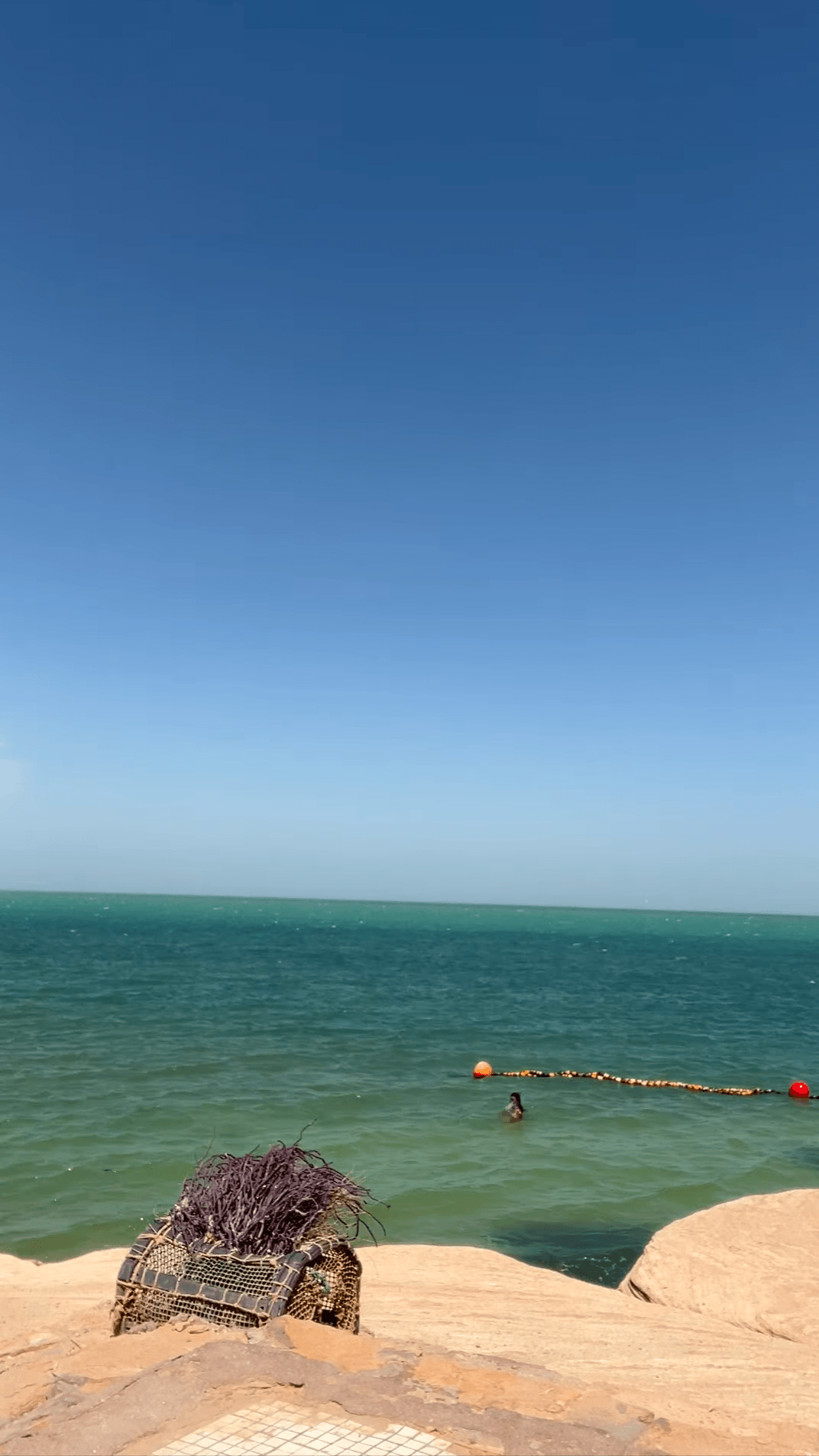
The city is at the edge of a peninsula. Look for properties on the water. That’s what I did. I was able to swim every day and just relax after a long journey. I barely had internet, but it was exactly what I needed.
Food in Mauritania
I will be honest: Mauritanian food was not a highlight of my trip. In the desert you will get a lot of sand in your food, this is simply the reality of eating outdoors in the Sahara. Camel meat is available and worth trying for the experience. Couscous and chickpeas feature heavily throughout the country.
If you’re worried, bring snacks.
How Long Do You Need?
I like to take my time while traveling. I spent ten days in the country. I have seen tour companies cover the main sights in 8 days, but that means everything is planned out in advance. If you have your own vehicle or have a guide/driver you could also do it in 10.
Most people I met on the road were spending just a couple of days in the country. Their priority was the train, but that also meant they missed out on the whole Atar area.
Practical Notes
- Getting around: shared taxis and local buses connect the main towns. Always travel during the day. Read my full Mauritania overland guide for route details.
- Desert trips: book through your Atar accommodation, they have the local contacts
- Languages: French and Arabic are essential outside of tourist-facing businesses. Google Translate offline is a genuine lifesaver
- Cash: ouguiyas for local transactions, euros for guides and accommodation. Carry more than you think you need
- Is it safe? Read my full guide: Is Mauritania Safe for Solo Female Travelers
- What to pack for the iron ore train: read my Packing List before you go
Check Out My Other Mauritania Guides
Need help planning your route? Book a 1-on-1 consultation. I traveled from Cote D’Ivoire to Western Sahara using public transportation as a solo female traveler.
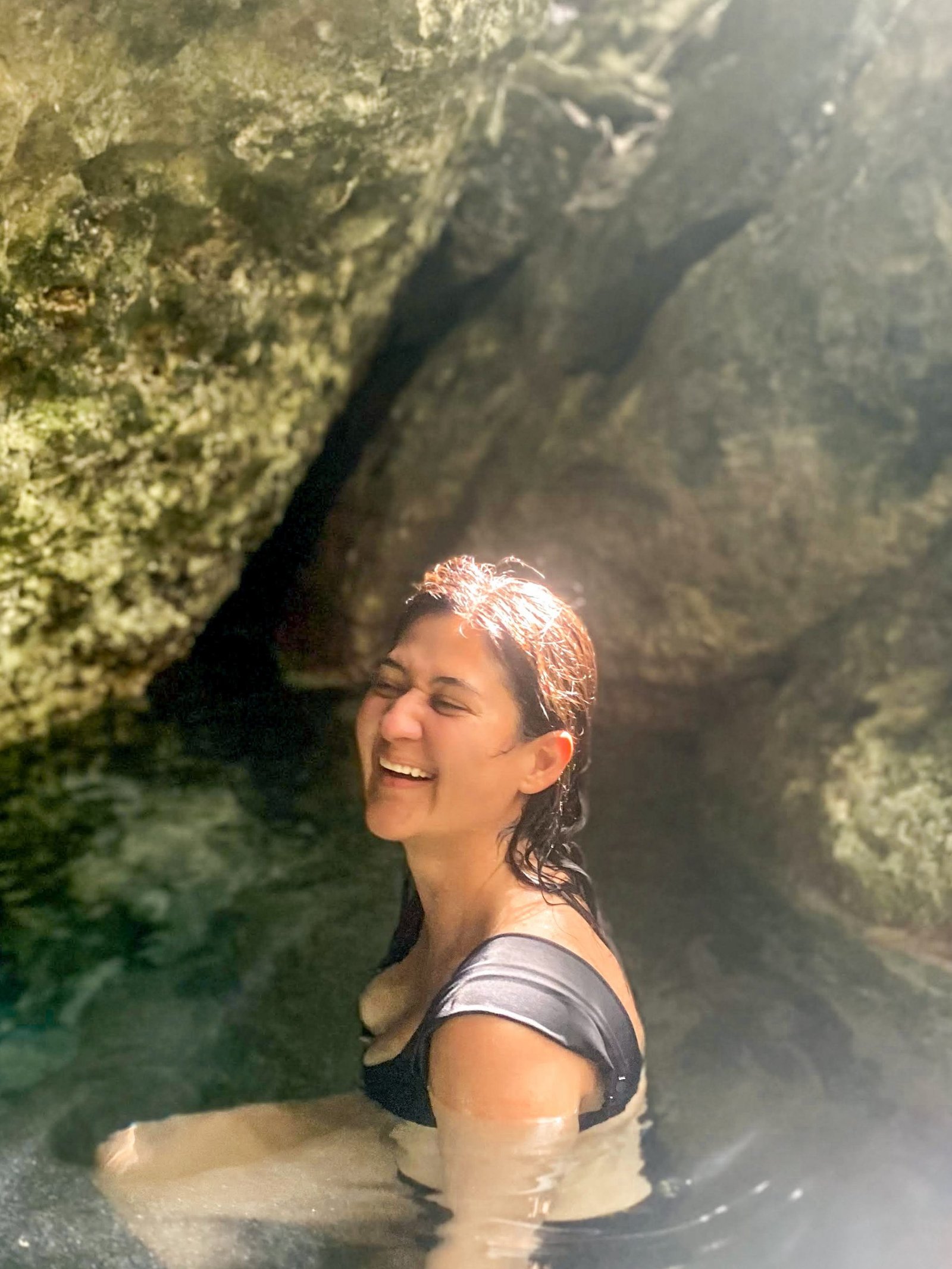
Hey there, and welcome to Go Global with Sibu! I’m a global citizen that has been living and traveling around the world since 2005 – all through budget travel, scholarships, study/work and living abroad opportunities. I share everything I’ve learned over the years here – to prove to you that you don’t need money or privilege to enjoy everything that this world has to offer.