Places to Visit in Mauritania: Where to Go
Places to Visit in Mauritania: Where to Go
Mauritania is not a country with a long list of places to visit. It is vast, sparsely populated, and it has very little tourism, except for the iron ore train. What it does have: ancient desert cities, it’s one of the gateways into the Sahara and it is probably the most adventure-oriented country in the region. This guide covers every place worth spending time in, as someone who traveled all over the country independently.
Nouakchott
Nouakchott is where your Mauritania trip begins if you’re flying in. It is Mauritania’s capital and largest city and home to over a million people. It is also, honestly, not a place worth spending a lot of time in.
The city doesn’t have much to do. The National Museum of Mauritania gives a quick introduction to the country’s history and nomadic heritage if you have a few hours to spare. The central market is worth a look for a glimpse of daily life. The camel market is a place many tourists visit, but I couldn’t bring myself to see them in bad conditions. Beyond that, Nouakchott is a base: get your cash and move on.
I stayed in the area near the Olympic Stadium and found it safe, walkable, and well-connected. One to two nights here is enough for most travelers. From Nouakchott, buses and shared taxis depart to Atar and all other destinations from the city’s garages.
Atar
Atar is a commercial town in the Adrar region and your base for everything that makes Mauritania worth visiting. It has more movement and energy than anywhere else in the interior. It’s a proper functioning town with markets, transport connections, and the infrastructure you need to organize the next stage of your trip.
The town itself is not a sightseeing destination. This is the gateway to Chinguetti, Ouadane, the oases in the Sahara, and the iron ore train route. As soon as you arrive, connect with your accommodation about organizing excursions. The local auberges have contacts with guides who know the Adrar region. Read reviews to see which ones organize activities: they will arrange everything from day trips to overnight desert camps. They normally charge very little for accommodation and make most of their profits from the trips.
Atar is also your last proper opportunity to buy supplies for the iron ore train. Ski goggles, blankets, snacks, etc. Here is my iron ore train packing list.
From Nouakchott, Atar is reachable directly by shared taxi or bus. From Atar, you travel onward to Choum for the train, or to Chinguetti and Ouadane for the ancient cities. I personally stayed in Atar one night and met other travelers I could partner up with to split costs and do the train ride with.
Chinguetti
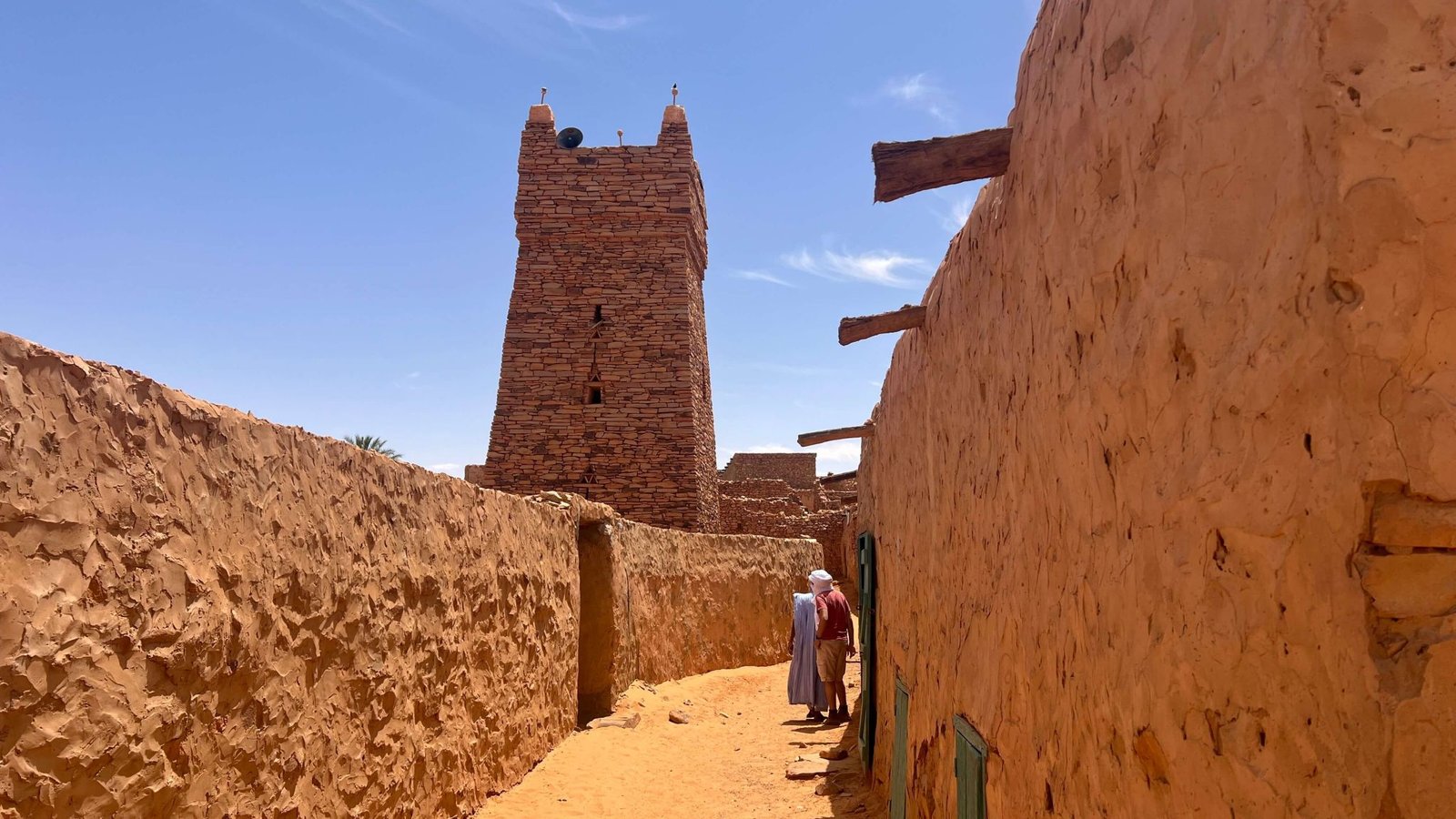
Chinguetti is one of the seven holy cities of Islam, a UNESCO World Heritage Site and definitely worth a visit. The town itself is very small. There is not much here in terms of conventional tourism infrastructure, which is entirely part of the appeal. Most people visit as a day trip from Atar, which is definitely doable, but I’d combine this with an overnight stay in the desert to make the most of your time.
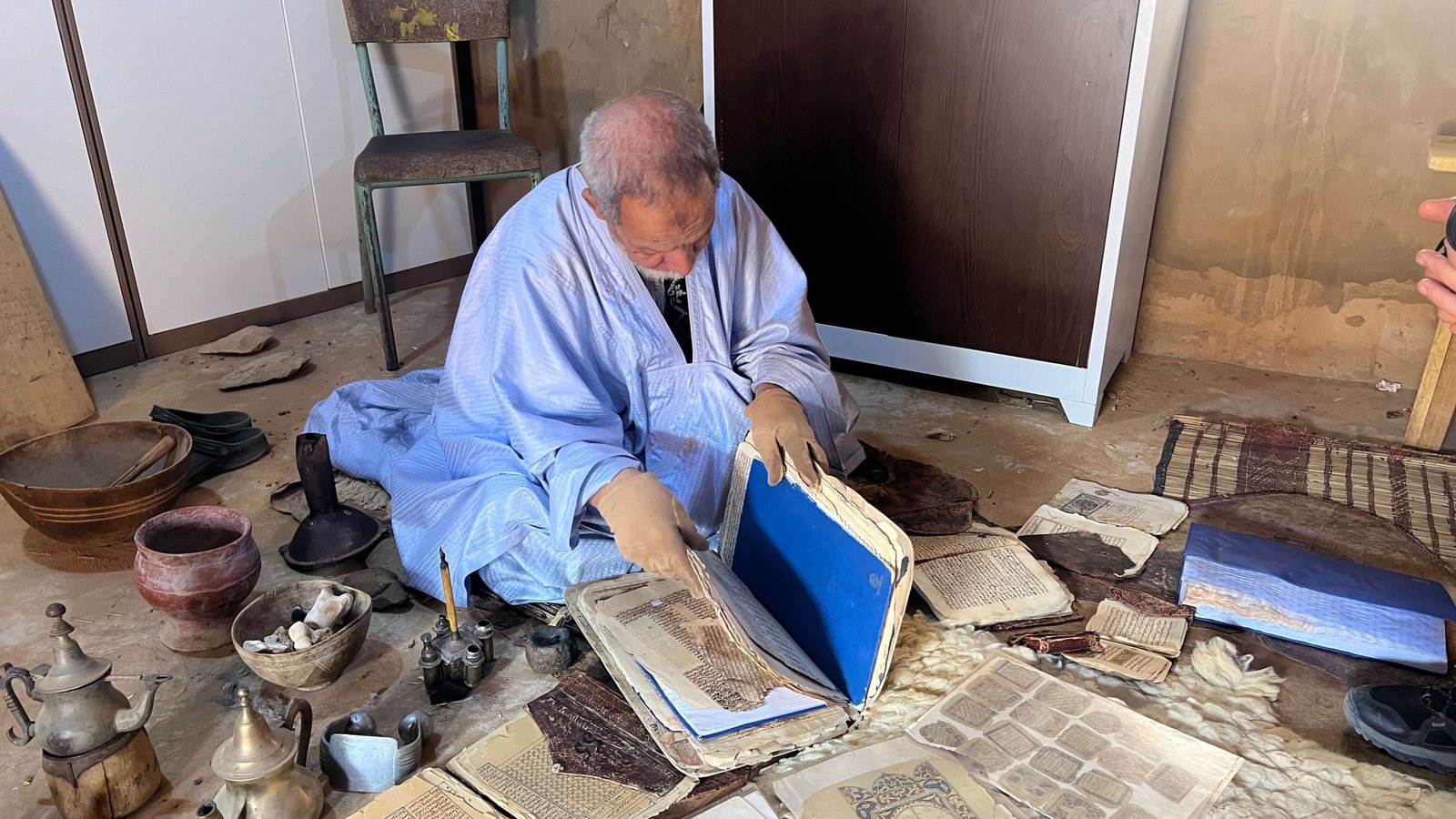
The highlights are the ancient libraries. Chinguetti’s guardians (men who have dedicated their lives to preserving manuscripts hundreds of years old) maintain collections that exist nowhere else on earth. These are not museums. They are living libraries, tended by families who pass their knowledge and responsibility from generation to generation.
A practical note: the guardians speak French or Arabic. English is not an option. Google Translate worked well enough throughout my visit to have a real conversation. Whenever I need to brush up on my language skills, I use this app and you can get 50% off your first Preply class here.
Ouadane
Ouadane is further from Atar than Chinguetti and harder to reach, which is precisely why most travelers skip it. Don’t skip it.
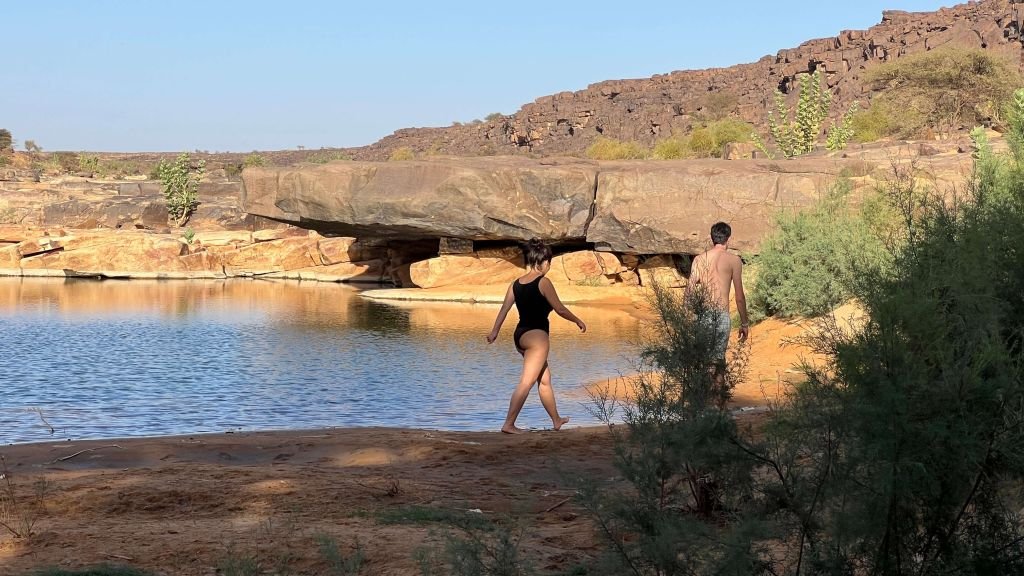
Like Chinguetti it has ancient libraries with centuries-old manuscripts and the same tradition of guardians preserving knowledge for future generations. Unlike Chinguetti it is even more remote, even less visited, and (in my personal opinion) even more beautiful.
New paved roads are being built and they might even be finished by the time you’re reading this. It takes time to reach both Ouadane and Chinguetti. You might not even make it to both in a single day and back to Atar. I recommend staying overnight. This will be arranged by your guides.
The Sahara Desert: Oases and Desert Camps
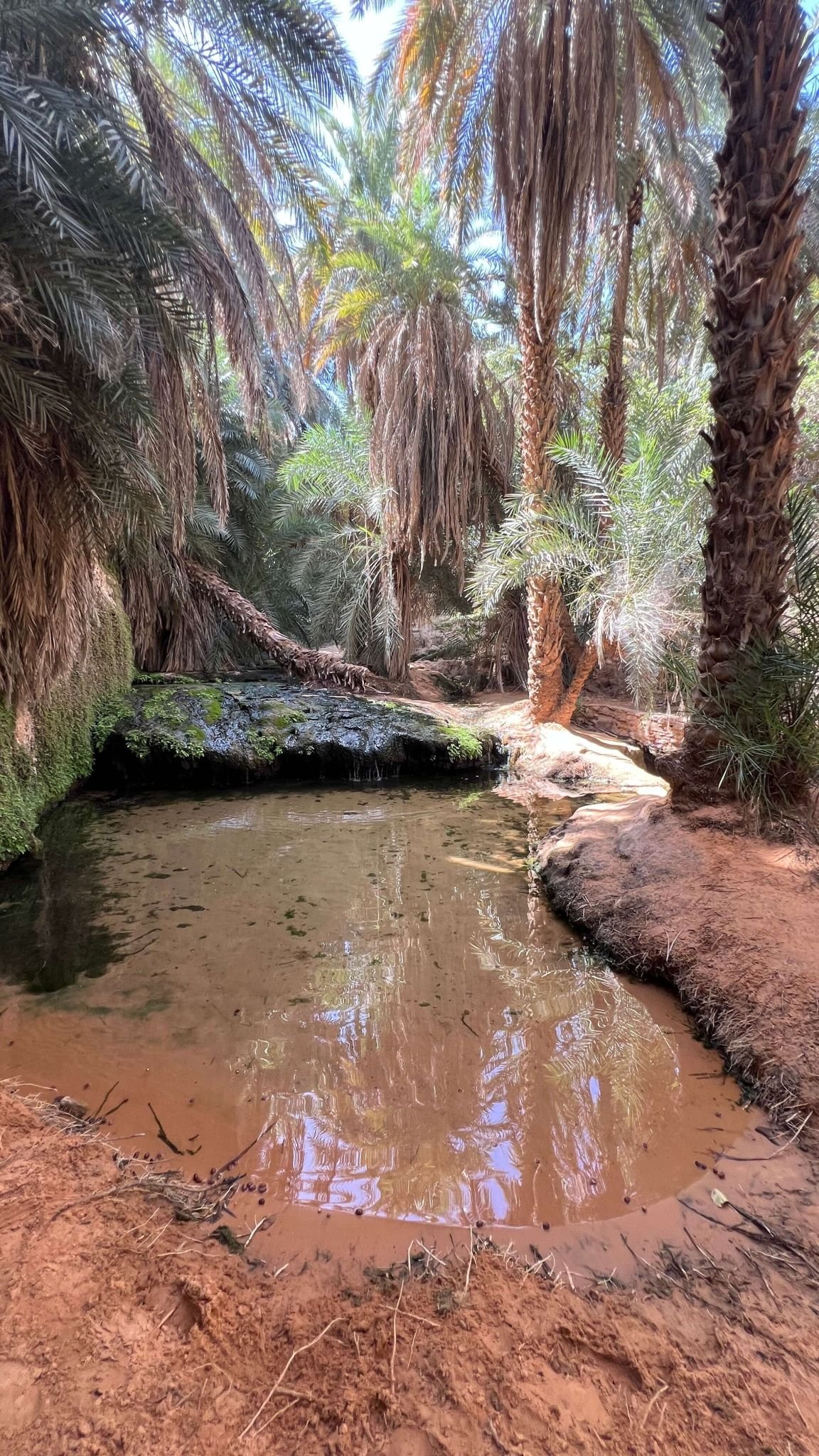
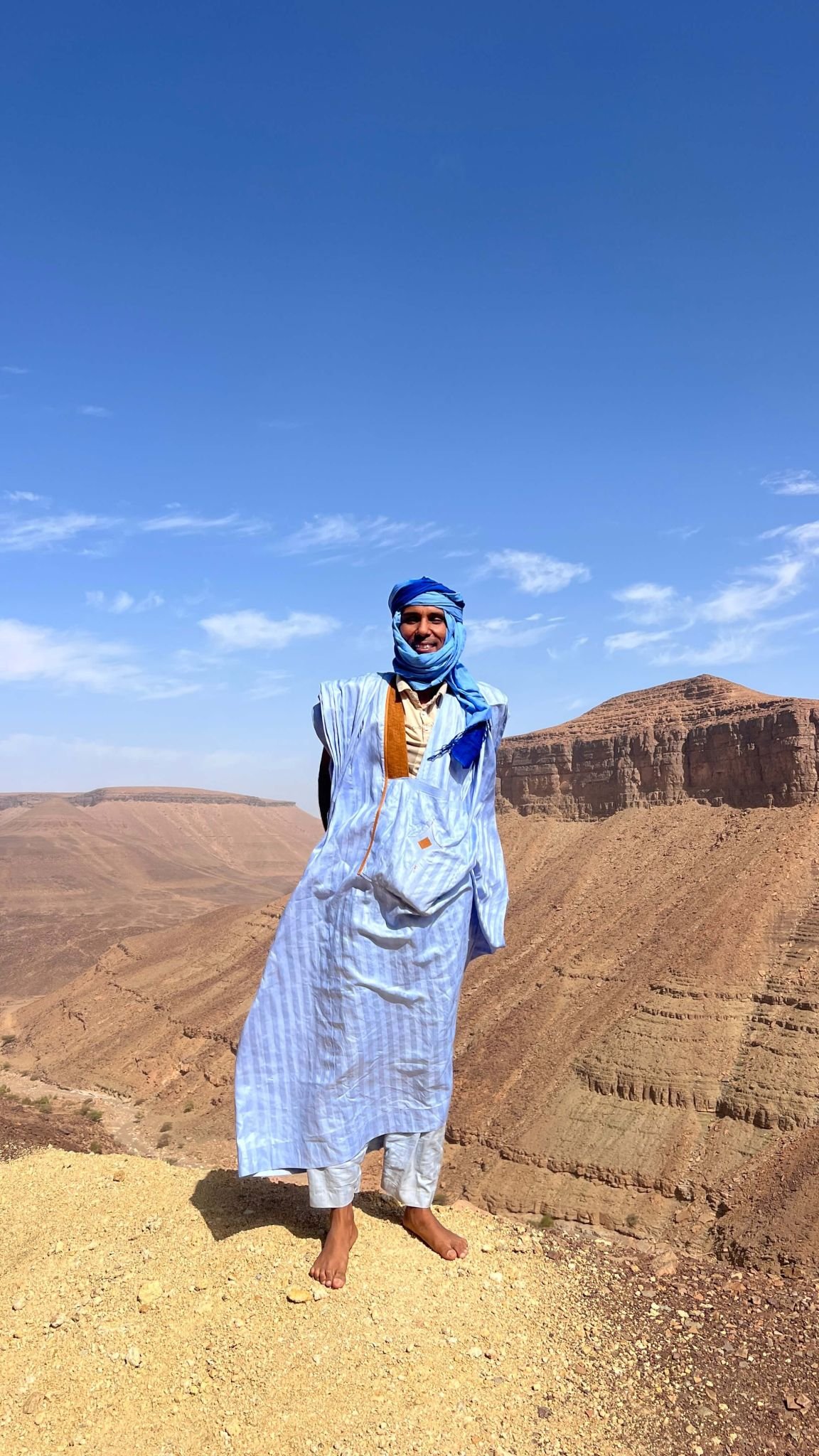
The Adrar region of Mauritania is an oasis I don’t hear many people talking about on social media, and one that’s definitely worth staying in.
The most well-known oasis camp is Terjit, which is where most travelers go. I skipped it in favor of a smaller, less-visited oasis organized through my accommodation in Atar. We were the only people there. Our camp had a manmade pool made of well water, and a natural lake nearby.
The area around Azougui is another option worth asking your accommodation about. If it hadn’t been for our guide I would have expected to stay in Terjit, but I’m glad we didn’t. Your guides know the territory far better than any guidebook, and the best camps are often the ones they take you to based on what you’re looking for rather than what’s most famous.
Book through your accommodation in Atar as soon as you arrive, or before via Booking.com. Tell your guides what you want from the experience and trust their judgment entirely.
How long to spend: minimum one night, ideally two
Key tip: the word to search for when booking is auberge, this applies to desert camps as much as town accommodation
The Iron Ore Train Route: Choum to Nouadhibou
The iron ore train is not just an experience, it’s what takes you from the edge of the Sahara desert all the way to the Atlantic.
I have a full dedicated guide covering everything about the train, the logistics, the guesthouse system in Choum, and what the ride is actually like: ADD LINKS
Read that guide before you plan anything else. If you’re riding the train you’ll be building your itinerary around the train schedule anyway.
Key practical note: there is no road connecting Choum and Nouadhibou. The train is the only direct link. If you ride the train to Nouadhibou, you cannot return to Choum overland, you must loop back via Nouakchott.
Nouadhibou
Nouadhibou is Mauritania’s second most important city. It is an industrial port town – it’s where the iron ore train ends and a fishing hub. There’s not much to do, but if you need to recover after the train, this is the spot.
The city is the closest major Mauritanian town to the Moroccan border, making it the entry or exit point for travelers coming from or heading to Western Sahara and Morocco. For travelers arriving from Senegal who want to skip Nouakchott, you can fly into Dakhla in Western Sahara, cross the border into Nouadhibou, ride the train to Choum (it will be empty of minerals then, I would not recommend this). The other alternative is to go to Nouakchott from Nouadhibou, go to Atar, and then do a loop by taking the train and ending up in Noaudhibou again.
If you look at Google maps you can find accommodation by the waterfront. There are no beaches as such, but the bay itself is beautiful and the water, even though it was really cold, is clear and stunning.
How long to spend: 2-3 nights for recovery after the train, or 1 night if passing through on the overland route
The Diama Border Area and National Park
If you are entering or exiting Mauritania via the Diama border crossing with Senegal, the route between the border and Nouakchott passes through a national park. If you’re traveling by bush taxi like I did you won’t be able to stop. But if you have your own vehicle, do some research to see if you can enter. It looked really nice as we were driving past and if I had the chance I would have liked to stop, even if only for a few hours.
The Diama crossing is one of two border options with Senegal, the other being Rosso. Diama puts you closer to Saint-Louis if you are heading that way, and is generally considered the smoother crossing of the two. I’ve heard horrors from Rosso. Diama takes longer but it’s the one I’d recommend.
How to Get Between These Places
Shared taxis and local buses connect the main towns: Nouakchott, Atar, and Nouadhibou are the main hubs. Always travel between cities during the day. Beyond the main roads, a vehicle and local guide are essential, public transport to Chinguetti, Ouadane, and the desert areas is extremely limited and not a reliable way to travel. You need your own vehicle or to get a guide with one.
Check Out My Other Mauritania Guides
Need help planning your route? Book a 1-on-1 consultation. I traveled from Cote D’Ivoire to Western Sahara using public transportation as a solo female traveler.
Hey there, and welcome to Go Global with Sibu! I’m a global citizen that has been living and traveling around the world since 2005 – all through budget travel, scholarships, study/work and living abroad opportunities. I share everything I’ve learned over the years here – to prove to you that you don’t need money or privilege to enjoy everything that this world has to offer.